
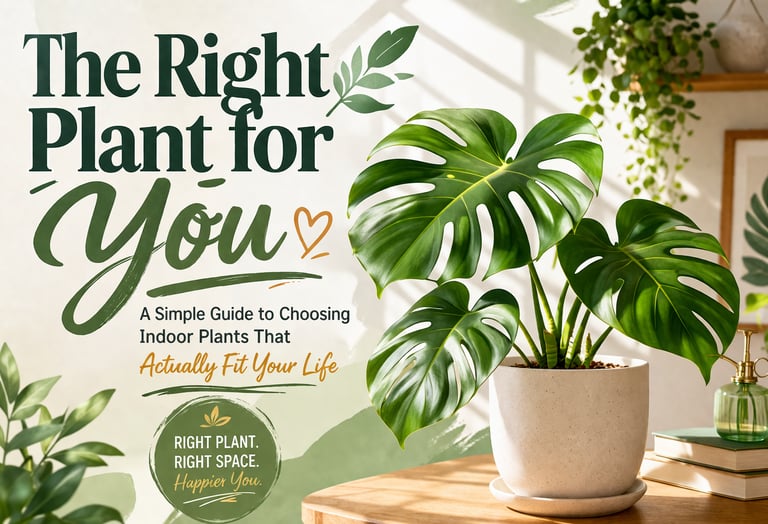
The Right Plant for You: A Simple Way to Choose Indoor Plants That Actually Fit Your Life
Not sure which houseplant to get? Learn how to choose indoor plants based on your lifestyle, home, and habits—no guesswork, no overwhelm.
4/24/2026
Why Choosing Plants Feels So Confusing
Most plant advice starts with lists.
“Buy this plant.”
“Avoid that one.”
“Water once a week.”
But that approach misses something important - your life isn’t a checklist.
A plant that works perfectly for someone else might struggle in your home, your schedule, or your space.
Instead of asking “what plant is best?”
It helps more to ask:
👉 “What actually fits how I live?”
Start With Your Habits (Not the Plant)
Before picking anything, think about how you naturally care for things at home.
No need to overanalyze—just be honest about your routines.
🏷️ If You Tend to Forget Things
You like having plants around, but you’re not checking soil every few days.
That’s completely fine.
Some plants are better off being left alone than constantly adjusted.
👉 You’ll do better with plants that:
tolerate dry soil
don’t react quickly to missed watering
stay stable in one spot
🏷️ If Your Lighting Feels Unclear
Maybe your place has light… but it changes throughout the day.
Some corners feel bright in the morning and dim in the afternoon.
You don’t want to track sunlight patterns or move plants around constantly.
👉 Look for plants that:
adapt to different light levels
don’t depend on perfect placement
If this sounds like your setup, this guide goes deeper:
👉 <a href="/best-desk-plants-low-light-offices">Best Desk Plants for Low Light Offices</a>
🏷️ If You Care About How Your Space Looks
You’re not trying to build a plant collection.
You just want your home to feel a little more alive and put together.
Plants are part of the atmosphere, not a project.
👉 In this case, focus on:
shape and size
where the plant sits visually
how it balances the room
🏷️ If You Enjoy Taking Care of Plants
You notice new leaves. You don’t mind checking soil or adjusting placement.
It feels calming, not like a chore.
👉 You’ll probably enjoy plants that:
grow visibly over time
respond to small changes
give you something to observe
Match the Plant to Your Space
It’s tempting to pick a plant first and figure things out later.
But it usually works better the other way around.
Take a quick look at your space:
Which spots stay bright most of the day?
Which areas feel dim no matter what?
Are there drafts, heat, or dry air?
You don’t need perfect conditions—just awareness.
Once you understand your space, choosing becomes much easier.
Think in Roles (This Makes Everything Easier)
Instead of trying to learn plant names right away, think about what you want each plant to do in your space.
🏷️ The “Easygoing” Plant
Handles missed watering and doesn’t need attention.
🏷️ The “Filler” Plant
Softens empty corners or shelves.
🏷️ The “Noticeable Growth” Plant
Shows progress over time, which makes it more fun to keep.
🏷️ The “Statement” Plant
Adds presence to a room without needing many others.
You don’t need all of these at once. Even one is enough to start.
Keep Things Simple at the Beginning
A lot of plant problems don’t come from neglect—they come from doing too much at once.
If you’re just starting, keep it simple:
pick one or two plants
place them somewhere consistent
use pots with drainage
water when the soil actually dries out
That’s enough to get comfortable.
If You’ve Had Plants Die Before
It usually comes down to a few common things:
watering too often
not enough light
water sitting in the pot
Nothing complicated—just small mismatches.
If you want a clearer breakdown, this will help:
👉 Why Your Houseplants Keep Dying (And How to Fix It Fast)
Where to Go Next (Based on What You Need)
Instead of repeating everything here, you can go deeper depending on what you’re looking for:
Want plants for your workspace?
👉 Best Plants for Productivity and FocusNeed something that works in low light?
👉 Best Desk Plants for Low Light OfficesCurious about easier watering options?
👉 Self-Watering Plant Pots: Do They Actually Work?
A Simple Way to Start
If you’re not sure where to begin, keep it easy:
choose one low-maintenance plant
place it where light is steady
check the soil before watering
That’s it. You don’t need a perfect setup—you just need a starting point that fits your life. The “right” plant isn’t the most popular one or the one everyone recommends. It’s the one that works quietly in your space, with your habits, without needing constant adjustment.
Start there, and everything else becomes easier.
You might also enjoy
Create a calmer daily routine
Improve focus & feel more grounded
Make everyday life feel lighter
Empowering women to be healthy, happy, and beautiful.
Affiliate Disclosure: Some of the links on this site are affiliate links, which means that we may receive a small commission if you make a purchase through them. This is at no extra cost to you. This helps support this website and allows us to continue to create content like this.
©2026 FemmeJourney. All rights reserved.